Cultivation workshops teach restaurant teams how gourmet mushrooms grow, where their ingredients come from, and how to handle them with intention — deepening menu knowledge, strengthening supplier relationships, and giving chefs the confidence to tell authentic ingredient stories on the plate and in conversation with diners. Understanding the growing process transforms how a kitchen approaches a single ingredient.
How does understanding mushroom cultivation change what a kitchen can do with the ingredient?
When a chef or kitchen manager learns how gourmet mushrooms are cultivated — the substrate they grow on, the humidity and temperature they need, the timing of harvest — they move past treating mushrooms as a commodity. They begin to understand the mushroom as a living crop with texture, flavour and performance characteristics rooted in real growing conditions, not just a commodity list item. A restaurant team that has stood in a growing space and seen oyster, shiitake or king trumpet mushrooms at different stages of maturity understands why a particular batch suits a braise better than a high-heat sear, or why the stems are as valuable as the caps.
This knowledge translates directly to menu development. A head chef who has seen how cultivation timing affects size, moisture content and flavour intensity can write menus that work *with* the season of supply rather than against it. They know when to feature a mushroom as the principal ingredient and when to use it as an accent. They understand why consistency matters, and how communication with a grower like Adi’s Urban Mushrooms can shape what gets grown to match the kitchen’s vision.
What happens to the relationship between a restaurant and its mushroom supplier after a cultivation workshop?
Before a workshop, the relationship between kitchen and grower is often transactional: an order is placed, a delivery arrives, invoices are paid. After a team has attended a cultivation session and seen the work that underpins a harvest, the dynamic shifts. The kitchen recognises the grower as a partner with knowledge, not just a vendor. Questions change. Instead of ‘Can you get me 5 kg of oyster mushrooms by Thursday?’, a chef might ask, ‘What are you expecting to harvest next week? What’s coming in at peak condition?’ That conversation opens space for collaboration — a grower can suggest which varieties will perform best for a particular dish, or alert a kitchen to a seasonal glut they might turn into a special or a preserved product.
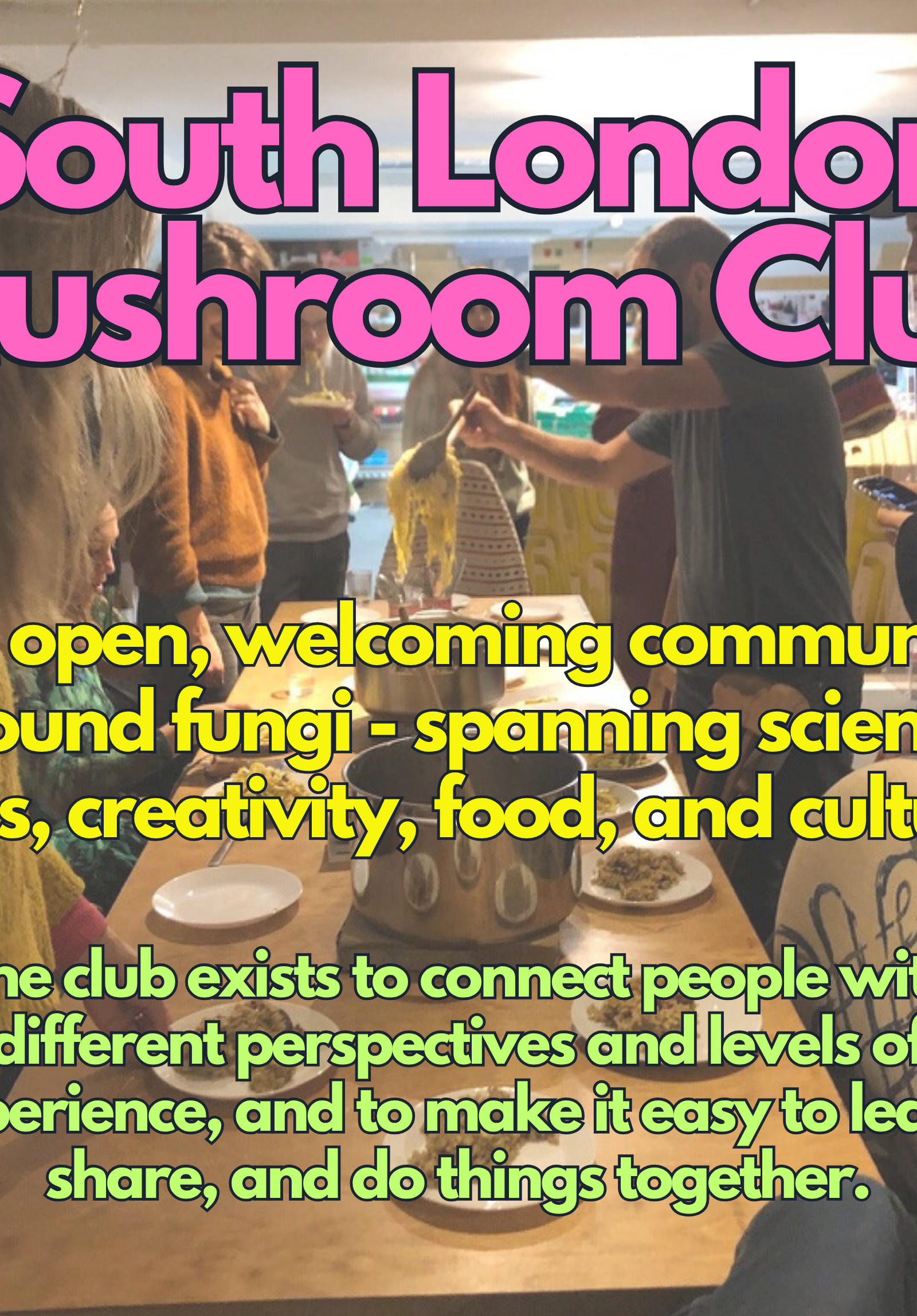
Adi’s Urban Mushrooms works within the local South London food network — embedded in spaces like West Norwood Feast as a trader and connected to the broader community through the Community Mycology Lab at Remakery Brixton and the South London Mushroom Club. Restaurants and food businesses that engage with cultivation workshops are choosing to deepen ties within that network. The result is supply that feels predictable and purposeful, not just convenient.
How can a restaurant use what they learn in a workshop to tell a better story on the menu and to diners?
Menu descriptions that come from genuine knowledge carry weight. A server or a chef can describe a dish with mushrooms honestly when they have seen where the ingredient grows. Instead of generic language (‘wild-foraged mushrooms’, ‘locally sourced’), a team that has attended a cultivation workshop can be specific: ‘King trumpet mushrooms grown on straw substrate by Adi’s Urban Mushrooms in South London, seared and finished with brown butter’. That specificity is not marketing spin — it’s transparency about sourcing and methods, which builds trust with diners who increasingly want to know where their food comes from and how it was grown.
The story extends beyond the menu. Conversations at tables, posts on social media, food writing and word-of-mouth all benefit when a kitchen team understands their ingredients deeply. A head chef interviewed about seasonal menus can speak with authority about when mushrooms are at their best. A small food business using mushrooms in a preserved product or on a tasting menu can articulate why they chose a particular variety and supplier. That authenticity resonates with customers and differentiates the business in a crowded market.
What specific skills do kitchen teams take away from a cultivation workshop?
A cultivation workshop is not a gardening hobby class. It teaches practical skills that apply directly in a professional kitchen. Teams learn to assess mushroom quality by sight and feel — how to judge freshness, texture and readiness for use. They learn how to store mushrooms correctly to preserve that quality. They understand how moisture content affects cooking behaviour: a mushroom fresh from the substrate will release water differently than a dried one, which changes cooking time and technique. They see why some varieties benefit from brushing rather than washing, and how substrate residue affects flavour.
For food producers working with mushrooms — making dried products, mushroom jerky, seasoned powders, or foraging-based items — this knowledge is foundational. Understanding the living plant informs every step of preservation and product development. A team that knows how a mushroom grows can handle post-harvest processing with intention and care, and can write transparent product descriptions rooted in real knowledge of the ingredient.
Who benefits most from attending a cultivation workshop?
Head chefs and sous chefs benefit because the knowledge directly informs menu strategy and dish development. Restaurant owners and managers benefit because a cultivated supply relationship reduces uncertainty and supports consistent quality. Front-of-house staff benefit because they can speak confidently about the ingredient and its provenance. Food producers and small business owners benefit because they understand their raw material and can make intentional choices about how to use and preserve it.
Any business in the food sector that serves or uses gourmet mushrooms has something to gain. The workshops run by Adi’s Urban Mushrooms are designed to meet teams where they are, whether they are looking to deepen supply knowledge, explore menu innovation, or understand the local food network they are part of. The learning is as much about relationship and community as it is about technique.
How do you find and book a cultivation workshop suited to your business?
Workshops can be tailored to the needs and scale of your business. A restaurant team might book a session focused on cultivar selection and supply planning. A food producer might want to focus on post-harvest handling and preservation. A small catering operation or food event might prioritize quick practical skills and ingredient storytelling. The starting point is a conversation about what your team needs to learn and how you work with mushrooms now.
Contact Adi’s Urban Mushrooms directly to discuss your business, your team size, and your goals. Workshops can be delivered in-house at your kitchen or premises, or at the studio’s growing space in South London. Whether you are an established restaurant in the West Norwood Feast network or a new food business exploring suppliers, the invitation to learn is open. The workshop is an investment in your team’s knowledge and in a supply relationship built on understanding, not just convenience.